
Hi, I’m Marianna
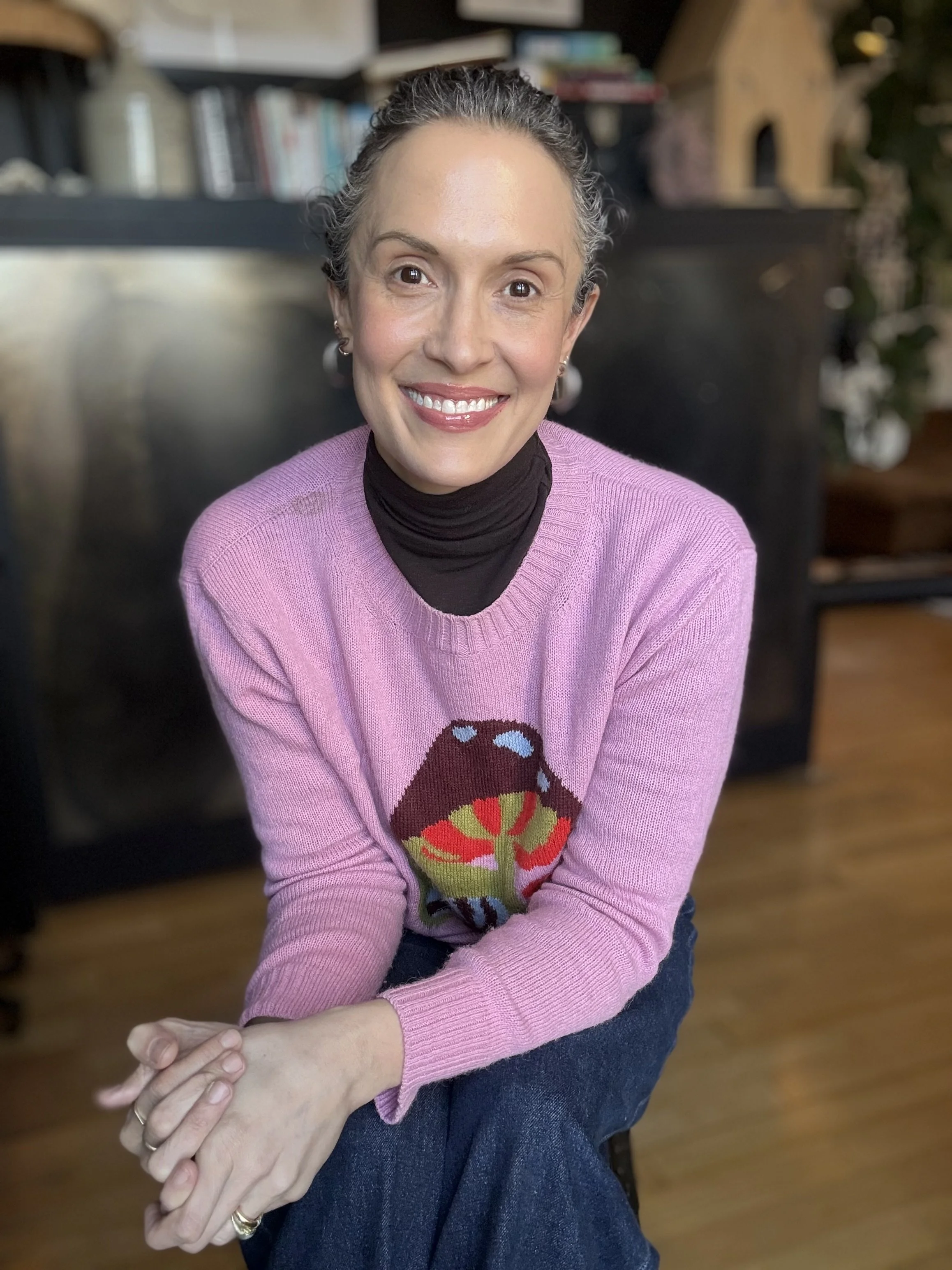
My professional title is Trauma Recovery Coach, but I'm much more than that. I'm a community builder, a lifelong learner, a wounded healer, and someone who believes that our pain points us toward our purpose.
I walk alongside people navigating trauma, burnout, and the weight of existing in systems that weren't designed for our humanity—so you can come home to yourself and move through the world differently.
-
Working with a trauma recovery coach is different from therapy. We're not diagnosing or spending years in analysis. We're focused on right now: What are you carrying? How is it showing up in your body and your life? And what can we do about it?
We will touch on what happened to you—gently, purposefully—but only as much as serves your healing. Our focus is on understanding how your past lives in your body and patterns now, and learning to work with your nervous system as it is today.
Our work together is collaborative and action-oriented. We'll explore your nervous system responses, identify patterns that aren't serving you, and create concrete strategies to help you move through the world differently.
Here's what makes this approach different: I don't pathologize your stress, burnout, or survival strategies. I see them as brilliant adaptations to impossible circumstances. My job is to help you understand what's happening, offer tools and support, and walk with you as you come home to yourself.
This is peer-based support—you're the expert on your life. I'm here as a guide, a witness, and someone who's done their own work and knows the terrain.
-
Since 2016, I've been on a journey of deconstruction—unlearning, exploring my identity, and understanding the oppressive systems that shape our lives. I've always been a people person, but in 2020, something shifted. I felt called deeper into the work of understanding our emotions, our nervous systems, and how we carry compounding trauma in our bodies.
Here's what I know: our systems are the problem. They're designed to extract everything from us—our labor, our care, our bodies—while offering little support when we burn out, get sick, become parents, or need to grieve. The trauma isn't just what happened to us individually; it's what happens when we're forced to survive in systems that were never meant to hold us.
I trained as a Trauma Recovery Coach because I wanted to offer direct, peer-based support grounded in non-pathologizing care. I don't see diagnoses as disorders—I see them as your nervous system's brilliant adaptation to impossible circumstances.
And I can offer this support not only because of my training, but because I've been there. I've navigated burnout, chronic illness, medical trauma, and the exhausting work of figuring out who I am beyond what I produce. I know what it feels like when your body keeps the score, when the world demands you keep going, when you're trying to heal while still showing up for life.
I'm here as someone who gets it- to offer compassion, hold space for your grief and growth, and walk alongside you as you come home to yourself.
-
Trauma has many definitions, but I find it most helpful to focus on how it shows up in your current lived experience.
Most trauma stems from our relationships with others. Perhaps you experienced too much too soon, too much for too long, or not enough of what you needed (neglect is trauma too). Trauma disconnects us from ourselves. It can strengthen the voice of an inner critic, leave us feeling not quite real, or create a sense of disconnection from our own lives. Sometimes trauma shows up as reactions or responses that surprise you like your body or emotions responding in ways that don't match the moment.
It's also completely normal to not remember if or how something happened and to just have these disconnected, confusing experiences. Your body remembers even when your mind doesn't.
I believe most human beings have experienced some degree of collective trauma and interpersonal trauma. Trauma isn't just the dramatic events we see in movies—a soldier returning from war, a natural disaster, a violent crime. It's also the ongoing experiences that shape us: systemic oppression, chronic invalidation, medical trauma, growing up in systems that couldn't hold your full humanity.
Trauma is more than feeling inconvenienced, but it doesn't have to be catastrophic to count. If it disconnected you from yourself, if it changed how you move through the world, if your nervous system is still responding to it, it matters. And you deserve support.